
Reviewed · FOOD & DRINK
Balkan pita making culinary experience
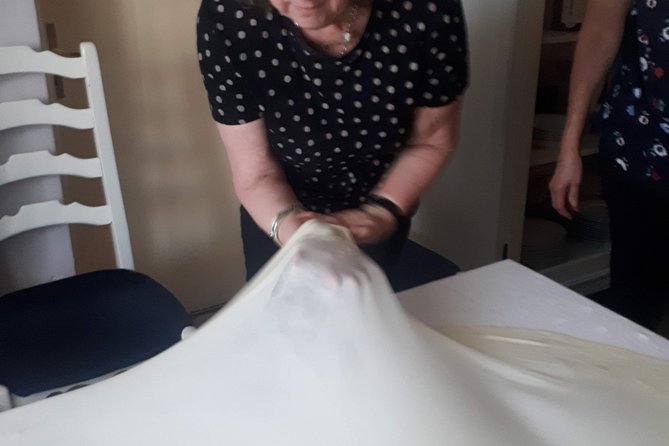
The most memorable part of this Balkan pita cooking class is the dough. You stretch it across a table until it becomes thin enough for burek or zeljanica. It looks difficult at first, but the host shows you the technique that makes it manageable. Then you bake and eat what you made.
I like the private family setting and the chance to learn a real local skill rather than simply sit down to a prepared meal. I also like that lunch is part of the experience, with your own pita coming out of the oven. The main consideration is transport: the class is near Podgorica in a village home, so you may need the offered pickup if you do not have a vehicle.
Key points
- Stretch the dough by hand: Learn the special table technique used to make thin pita sheets.
- Cook in a local household: The class takes place in a village home outside Podgorica, not a formal cooking school.
- Eat your own lunch: Burek and zeljanica are baked after the class and served as part of the experience.
- Work with a local family: Dijana and her family provide a warm, personal setting and explain some local food traditions.
- Book a private session: Only your group takes part, allowing the pace and instruction to feel more personal.
- Plan around the 10 a.m. start: The class lasts about two and a half hours and returns you to the meeting point.
Stretching Balkan pita in a village home
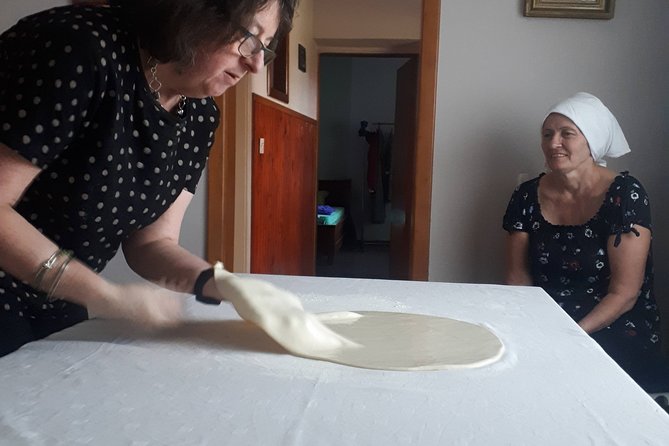
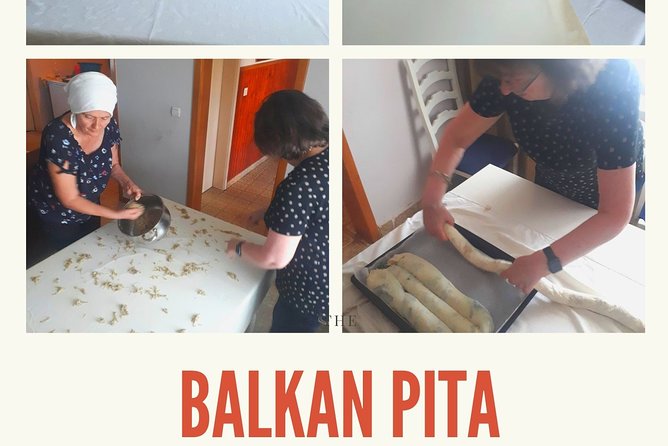
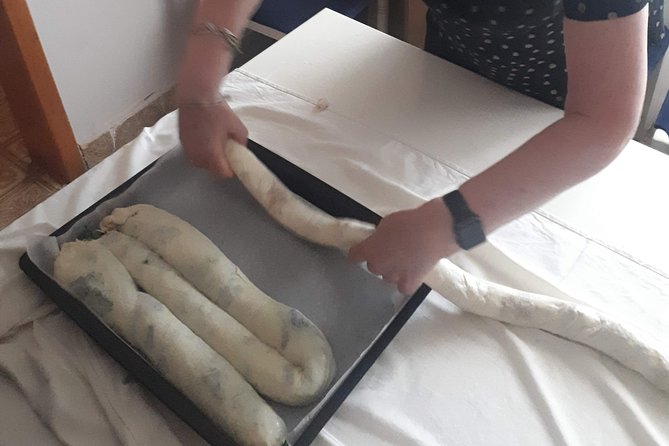
This experience is built around one simple but surprisingly demanding task: making the dough thin enough to become Balkan pita. You do not just watch someone prepare burek. You work with the dough yourself, spread it over a table, add the filling, and help prepare the finished pie for baking.
That hands-on step gives the class its value. Pita dough is not something most visitors can easily learn by ordering a dish in a restaurant. Here, you get to see how the texture changes as it is stretched, and you get the satisfaction of handling a skill that looks far harder than it turns out to be.
The setting matters, too. You meet the host at a local household in a village near Podgorica. This is a small, personal activity rather than a large demonstration. You are welcomed into a family environment and spend the morning around a table, working with a local chef and the people who know the food best.
Dijana and her family are part of the hosting team. They explain the food and some of the history of the area, then guide you through the preparation. The available feedback points to a friendly and fun welcome, which fits the format well: this is designed to feel like a visit to a local home, not a rushed restaurant workshop.
More Food Tours in Podgorica
- Wine and food tasting in the traditional winery
★ 5.0 · 34 reviews - Podgorica Car Trip – Architecture, History, Wine tasting, Churches, Doclea city
★ 5.0 · 20 reviews - National parks and wine tasting (NP Lovcen, NP Skadar lake, Cetinje, Njegusi)
★ 5.0 · 16 reviews
A 10 a.m. start with room to learn
The class begins at 10 a.m. and lasts about two hours and 30 minutes. That timing works well if you want a substantial morning activity followed by lunch, rather than spending your evening in a cooking studio.
At the start, the host explains the process and introduces the pita dough. You will learn how it is used in regional dishes such as burek. The instructions are practical, and the chef works alongside you as you try the technique yourself.
The schedule is not a long list of stops. The class is focused on one household, one cooking project, and one meal. That simplicity is useful. You can pay attention to the dough rather than keeping an eye on the clock or moving between several activities.
You should expect some trial and error. Spreading dough over a table is described as the difficult part, so do not expect perfect sheets on your first attempt. The point is to learn the method and enjoy the process. If you like cooking classes that give you a task to practice, this is a better fit than a demonstration where you only watch.
Learning the table-stretching technique
The dough lesson is the heart of the morning. The host explains how to work it, then shows you how to spread it across the table. The special technique can seem difficult at first because the dough must become very thin without tearing.
That challenge is part of the fun. You get a clear goal, and the result is visible as you work. As the dough spreads, you can see how the base of the pita is formed. Once you understand the method, the task becomes more satisfying and less mysterious.
The class uses the dough for traditional Balkan pies, including burek and zeljanica. Burek is commonly associated with savory fillings, while zeljanica is a pita made with greens. The information provided does not specify every ingredient or filling used during your particular class, so expect the named dishes rather than a fixed menu beyond those items.
This is also a good lesson in why handmade food takes time. A restaurant can put a plate of burek in front of you quickly, but the class shows the work behind it. You see the dough prepared, stretched, assembled, and baked. That gives your later meal more meaning without turning the morning into a formal lecture.
Baking the pita and eating lunch
After the preparation, the pita goes into the oven. Lunch is included, and the main dishes are the burek and zeljanica you helped make.
This final meal is more than a convenient snack. It completes the lesson. You can see how the dough changes in the oven and then taste the finished result while the process is still fresh in your mind.
The experience does not list alcoholic drinks as included. Optional drinks may be available, but you should treat those as an extra cost. Lunch is included, while alcoholic beverages are not.
The meal also makes the activity suitable for people who want food and instruction in equal measure. If you are only looking for a quick tasting, this may feel longer than necessary. If you enjoy learning by doing, the meal gives the class a clear payoff.
More cooking classes in Podgorica:
- Kotor private cooking class with lunch and Old town guided tour
★ 5.0 · 35 reviews - Cooking Class with dinner/lunch in Ulcinj Montenegro
★ 5.0 · 8 reviews - Handmade Pasta Cooking Class with Italian Chef in Montenegro
★ 5.0 · 6 reviews
Why the private format is useful
This is a private activity, so only your group takes part. That makes a real difference in a hands-on class. You can ask questions without competing with a large group, and the host can watch your technique as you stretch the dough.
A private setting is especially helpful when a task is unfamiliar. The host can correct your movements, explain the process again, or let you take more time if the dough is not cooperating. The exact pace will depend on your group, but the format allows more flexibility than a shared class with a fixed crowd.
The family setting adds another layer. You are not only learning a recipe. You are spending time in a local household and hearing some explanation about the food and area from the people preparing it. That personal contact is likely to be the strongest reason to choose this over a standard cooking lesson.
The tradeoff is that the experience is less formal. If you want a polished culinary school with a printed recipe, a professional kitchen, and a highly structured menu, this may not be what you are seeking. The appeal here is the home setting and direct contact with the host family.
Reaching the village near Podgorica
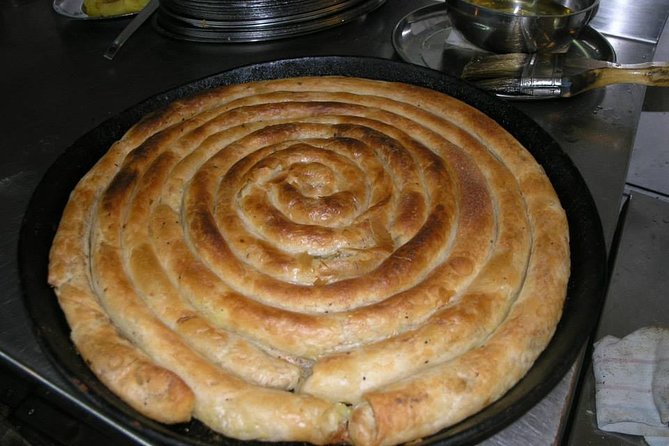
The activity starts in Podgorica, but the cooking takes place in a local village home outside the city. Pickup is offered, including hotel pickup and drop-off if you do not have a vehicle.
That option is important because the experience is not presented as a city-center walking class. If you are driving, you can arrange to meet at the stated meeting point and return there at the end. If you are without a car, confirm the pickup details when booking so you know how the transfer will work.
The tour ends back at the meeting point. The supplied information does not give an exact driving time, village name, or pickup schedule beyond the 10 a.m. start, so you should confirm those practical details before the day of the class.
Public transportation is nearby, and service animals are allowed. Most people can participate, but the class involves working with dough and taking part in food preparation. If you have specific mobility or dietary concerns, ask the provider before booking, since the available details do not describe accessibility features or dietary substitutions.
Is $50 fair value?
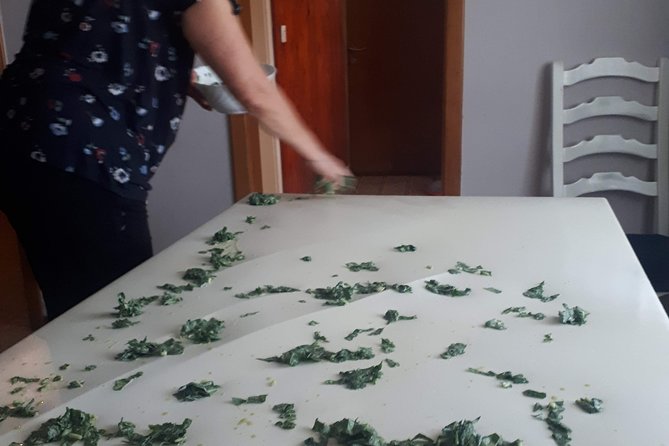
At $50, this is a reasonable price for a private two-and-a-half-hour experience that includes instruction, local hosting, and lunch. You are paying for more than a plate of burek. The price covers access to a household setting, guidance from a local chef, and a cooking activity that would be difficult to arrange independently.
The value is strongest if you want a personal experience and enjoy taking part in the work. A restaurant meal would cost less in many places, but it would not teach you how to make the dough or give you the same contact with a local family.
The value is less clear if you are not interested in cooking. The class centers on stretching and preparing pita, and that process takes time. You should not book it only because you want a quick lunch. Book it because you want lunch plus a skill and a local encounter.
The private format also supports the price. Your group is not added to a large class, and the host can focus on your technique. For couples, families, or friends who want a shared activity near Podgorica, the cost can make sense.
Who should book this cooking class?
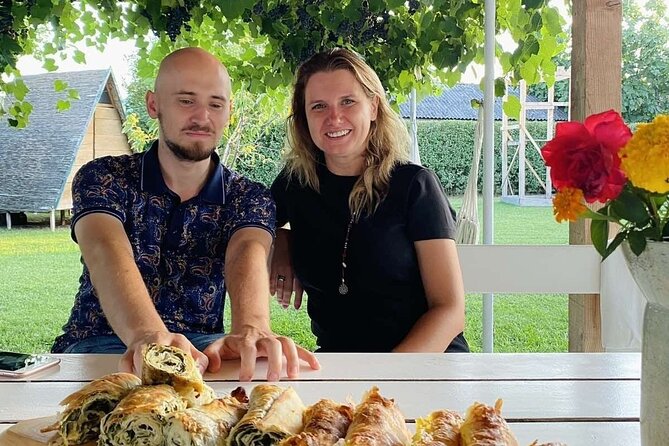
I would recommend it to food-minded visitors, couples, families, and small groups who want something personal to do near Podgorica. It is also a good choice if you have already seen the main sights and want a morning that connects you with everyday local food.
It suits curious beginners because you do not need to arrive knowing how to make pita. The host explains the process and works with you. The class also suits people who enjoy practical souvenirs: you leave with a technique you may be able to try again at home.
This is less suitable for anyone who dislikes hands-on cooking, has very limited time, or wants a broad tour of Podgorica. The itinerary stays focused on one food and one household. That focus is its strength, but it also defines the experience.
Dijana and her family are important to the character of the morning. Their welcome and explanations help turn a basic recipe lesson into a social visit. If you value friendly conversation and a relaxed local setting, that personal side should carry weight in your decision.
Booking, cancellation, and practical details
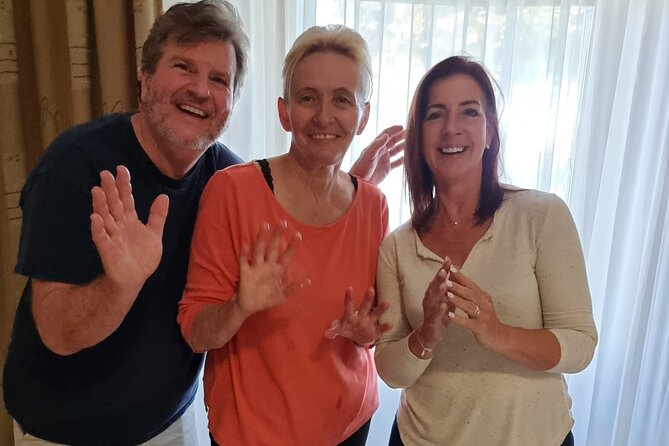
The tour costs $50 and confirmation is provided when you book. It begins at 10 a.m., lasts approximately two hours and 30 minutes, and returns to the meeting point.
Free cancellation is available if you cancel at least 24 hours before the start time. Cancellations made within 24 hours are not refunded, and changes within that period are not accepted. The cut-off follows local time.
You can use a mobile ticket. Pickup is offered, but exact arrangements should be confirmed before the activity. Drinks are not included, and alcoholic beverages are optional.
Should you book the Balkan pita experience?
Book this if you want to learn a real local cooking skill, eat a homemade lunch, and spend time in a family setting outside Podgorica. The hand-stretched dough is the memorable feature, and the private format gives you the attention needed to try it properly.
Skip it if you want a fast meal, a city sightseeing tour, or a formal cooking school with a published menu and detailed recipe pack. For the right visitor, $50 buys a personal morning, a meal you helped create, and a better understanding of why Balkan pita takes patience.
FAQ
Where does the Balkan pita cooking experience take place?
It takes place in a local household in a village near Podgorica, Montenegro.
What time does the activity start?
The activity starts at 10 a.m.
How long does the experience last?
It lasts approximately two hours and 30 minutes.
How much does the experience cost?
The listed price is $50.
Is hotel pickup available?
Yes. Pickup and drop-off are offered if you do not have a vehicle. Confirm the exact arrangements when booking.
Is this a private activity?
Yes. Only your group takes part in the activity.
What will I learn to make?
You will learn to make pita dough and prepare Balkan dishes using it, including burek and zeljanica.
Is lunch included?
Yes. Lunch consisting of Balkan pita, including burek and zeljanica, is included.
Are drinks included?
Alcoholic beverages are not included. Drinks may be available as an optional extra.
Can I cancel for a full refund?
Yes, if you cancel at least 24 hours before the experience start time. Cancellations within 24 hours are not refunded.
Just added around Podgorica
- Skadar Lake & Virpazar return trip from Podgorica city★ 5.0 · 17 reviews
- Wine tour- Family winery visit, food tasting & Skadar Lake boat cruise★ 5.0 · 4 reviews
- Virpazar Skadar Lake National Park Guided Boat Tour★ 5.0 · 21 reviews
- NORTH TOUR Np Biograd Gora-Lake-Moraca Canyon & Monastery-Kolasin★ 5.0 · 3 reviews
- Transfer Podgorica Airport-city center★ 5.0 · 4 reviews
- Kotor & Budva Old Towns & Panoramic Views from Podgorica★ 5.0 · 20 reviews
- ALBANIA tour – Rozafa, Skadar lake, Niagara waterfalls, Shkodra★ 4.0 · 10 reviews
- Private Podgorica City Walking Tour★ 5.0 · 9 reviews
Food & Drink, compared.
3 Hour Kotor Food Tour – Rick Steves’ Recommended
Read our review →
Private tour: Homemade food and wine tasting at my family home
Read our review →
Kotor Jeep Tour: Hidden Stone Village & Food Tasting
Read our review →
Private National Park Lovcen with food and wine tasting
Read our review →
Food, wine and the best private walking tour of Kotor
Read our review →
Unique gastro experience with locals in high hills above Budva!
Read our review →Browse the lists this tour appears in